Let’s be real with you.
The Sony FX3 is not the newest camera on the shelf. In a market where new gear drops every six months, calling it “current” would be a stretch.
We know that. Sony knows that.
But here’s the thing — we just bought another one.
That’s right. Film Roxx, a production house that has been shooting with the FX3 since the day it launched, went ahead and added a second unit to our kit in 2026. Not because we hadn’t noticed the newer options. But because after 4–5 years of real-world production — broken units, overnight shoots, international locations, and more stressful deadlines than we’d like to count — this camera keeps proving itself.
So if you’re a filmmaker sitting on the fence about whether the FX3 is still worth your money in 2026, this is the article for you. No spec sheet recitation. No fluff. Just what we’ve actually learned from using it — a lot.
What Are the Main Features of the Sony FX3?
The Sony FX3 is designed for filmmakers and video professionals who want cinematic imagery with compact mobility. Its full-frame sensor gives it advantages that still matter in 2026 workflows.
Key features include:
- Full-frame Exmor R CMOS sensor, optimized for video capture with wide dynamic range and high sensitivity.
- 4K video up to 120 frames per second and Full HD up to 240 fps for smooth slow motion.
- Dual native ISO for clean performance in various light conditions.
- 10-bit color depth and 4:2:2 sampling for rich color grading.
- Active cooling system that maintains performance during extended grabs.
- Professional audio input options via XLR adapter for high-quality sound capture without external recorders.
- Robust connectivity and monitoring features for remote control and confidence in setup.
The FX3 combines cinema-class features with a form factor that is well-suited for run-and-gun work, interviews, narrative shoots, and high-end content creation.
Why We Still Use (and Buy) the FX3
1. Dual Native ISO Is the Real Hero
Ask any filmmaker at Film Roxx what single feature they’d fight to keep, and most would say the same thing: Dual Native ISO.
Bali is a place of extremes — blazing midday sun, shadowy temple interiors, candlelit dinner setups, and outdoor events that run well past sunset. We shoot in all of it.
The FX3’s Dual Native ISO (800 and 12,800) lets us move between those conditions without stopping to rethink our lighting setup. Noise stays clean. Skin tones stay accurate. The image holds up even when the environment doesn’t cooperate. For a production team that moves fast and can’t always control the light, that’s not a nice-to-have. That’s a lifeline.
2. The Compact Body Does More Than You Think
Full-size cinema cameras have their place. But try rigging one inside a narrow warung, mounting it to a motorbike, or squeezing it into a shot that calls for a low-angle, tight-space setup.
The FX3’s compact body changes what’s physically possible on a shoot. We’ve done rigs and angles with the FX3 that would have taken twice the effort — and twice the crew — with a larger camera. Less weight, less time, more creative freedom. Landscape or Portrait? Never an issue.
And when the shoot wraps? The FX3 fits into a sling bag. Not a pelican case. Not a dedicated camera backpack. A sling bag. For a team that’s constantly moving between locations across Bali (and beyond), that kind of portability is a serious operational advantage.

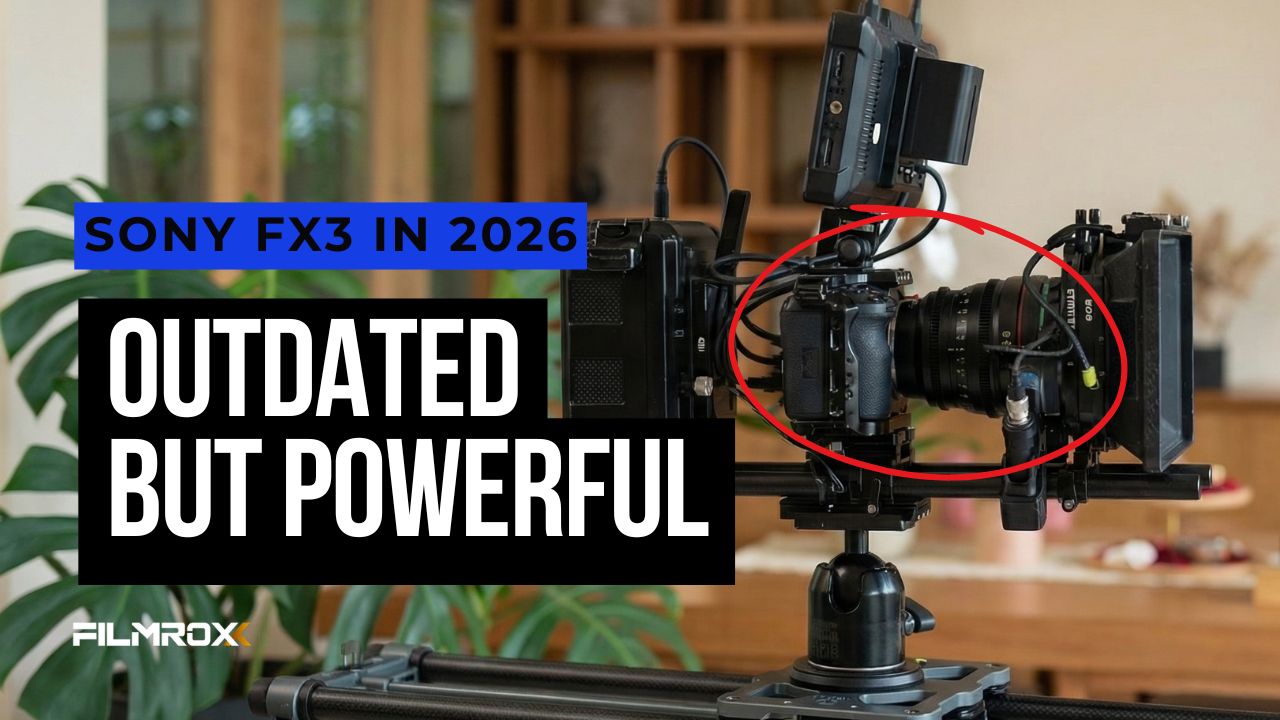
Sony FX3 Owned by Film Roxx
3. Accessory Compatibility That Actually Makes Sense
One underrated strength of the FX3 is how well it plays with others.
Because it shares Sony’s E-mount system, most accessories — cages, follow focus systems, external monitors, mattebox setups — work across the FX3 and other Sony mirrorless bodies like the A7S III. If you’ve already invested in a Sony ecosystem, you’re not starting from scratch.
Third-party support is equally strong. Brands like Tilta, SmallRig, and others have built out extensive FX3-compatible accessories. So building your ideal rig doesn’t require spending a fortune on proprietary gear.
4. The Learning Curve Is Almost Flat (If You Know Sony)
If your team has shot on any Sony camera before, the FX3 feels familiar from day one. The menu logic, button layout, and general workflow follow Sony’s house style closely enough that experienced Sony shooters can pick it up and be productive almost immediately.
For a production company that hires crew on a per-project basis, that familiarity matters. You don’t want to spend the first hour of a shoot explaining where the ISO button is.
5. Hollywood Used It. That Settled the Debate.
Still not convinced a “small” camera can handle serious work?
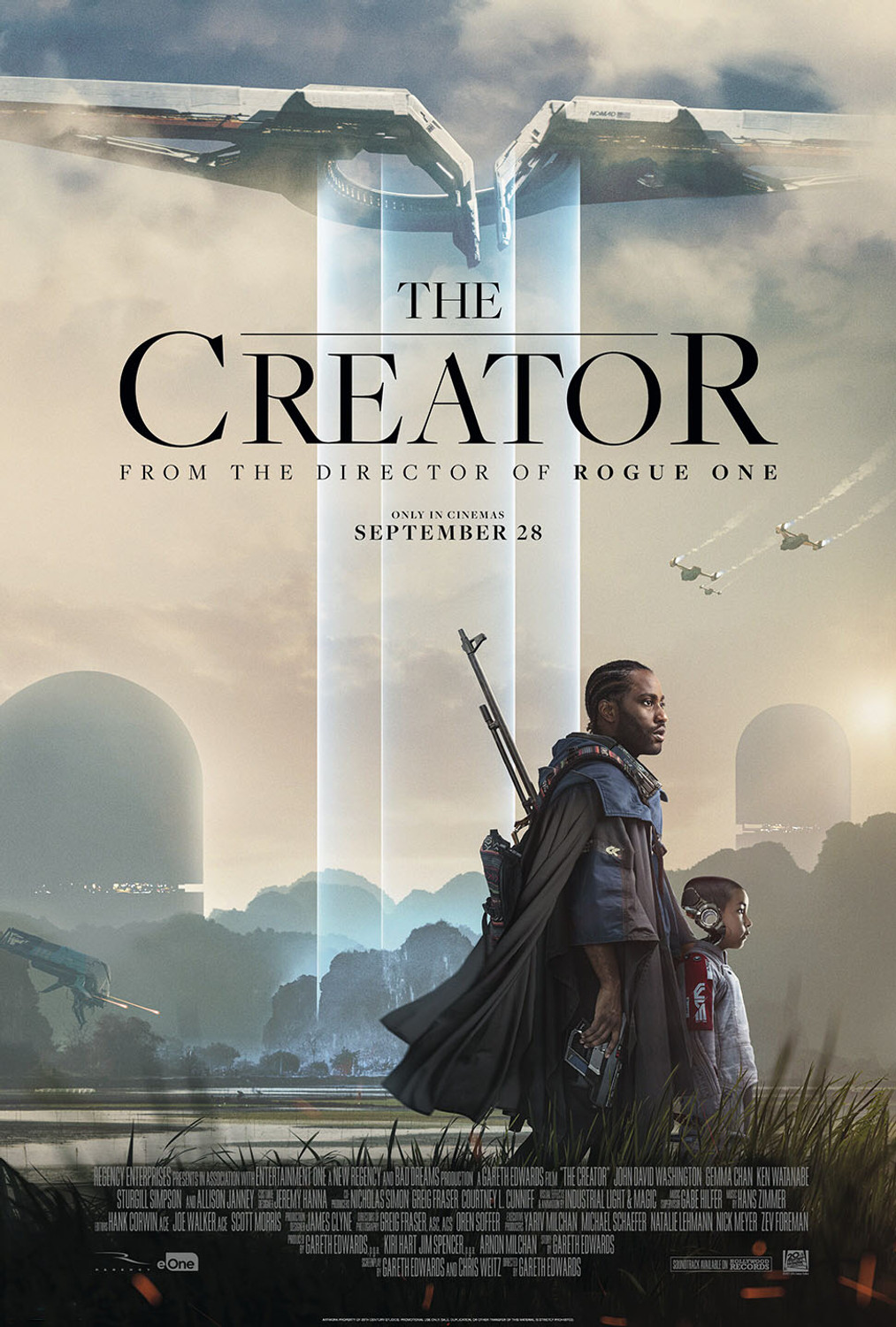
The Creator (2023), a major Hollywood sci-fi production directed by Gareth Edwards, was shot significantly on the Sony FX3. A film with that level of visual ambition, made with this camera, tells you something important: the barrier between “indie camera” and “production-grade tool” is gone.
If it’s good enough for a Hollywood feature, it’s good enough for your brand film.
6. The 5-Axis Stabilization Is Genuinely Impressive
We’ll say it plainly: the in-body 5-axis stabilization on the FX3 is outstanding.
Handheld shots that would normally require a gimbal come out smooth. Walk-and-talk sequences, follow shots, and fast-moving action — the FX3 handles them with far less shaking than you’d expect from a handheld setup. It doesn’t replace a gimbal for everything, but it extends how far you can push without one. That saves time and setup effort on every single shoot.

Where the FX3 Falls Short (And We’ll Be Honest About This)
We’ve praised this camera for four years. We’ve also broken several of them. So let us tell you what genuinely frustrates us.
Overheating is a real concern. The FX3 was not built for heavy-duty, all-day continuous recording. Under demanding conditions — especially when paired with fast cinema lenses like Dzofilm or Zeiss Primes — heat can become a problem. Those lenses will give you that full cinematic look you’re after, but push the camera hard and long enough, and it will let you know.
Battery life on longer productions needs a plan. We recommend pairing the FX3 with a V-Mount battery if you’re shooting more than 12 hours per day. It’s not a deal-breaker, but it’s something you need to factor into your kit from day one.
No built-in ND filter. This is one that stings, especially in Bali’s harsh daylight. You’ll need an external ND — whether that’s a variable ND, a mattebox system, or clip-on filters. The irony? Once you add external ND gear, you’ve added bulk to a camera you chose partly for its compact size. It’s a trade-off worth knowing upfront.
Resolution is not the FX3’s strongest suit going into 2026. Newer cameras are pushing higher resolutions, and if your client needs large-format delivery or significant reframing in post, that ceiling can be limiting.
The screen has a known looseness issue — it can shift or feel slightly unstable in extended use. Worth noting that the newer Sony FX3A has reportedly addressed this, so if you’re buying fresh, it’s worth checking which version you’re getting.
So, Should You Get the Sony FX3 in 2026?
We’ve used this camera since launch. We’ve worn out units, dealt with its quirks, and pushed it further than it was probably designed to go.
And when someone asks us what camera a filmmaker should have in 2026?
We say FX3. Every time.
Not because we’re sponsored (we’re not). Not because we haven’t tried other options. But because after years of real production work across hotels, brands, tourism films, and commercial projects, the FX3 keeps delivering. The Dual Native ISO alone has saved shoots that other cameras couldn’t handle. The compact size has opened up creative angles we couldn’t have gotten otherwise. The Sony ecosystem compatibility has saved us budget and setup time on dozens of projects.
Is it perfect? No.
Does it have limitations? Absolutely.
But no camera is perfect — and the FX3’s strengths align with what production work in the real world actually demands.
We even bought a second one for lower-level productions, knowing exactly what it can and can’t do.